7 min read
Bicycle Cost-Reduction Buyer Route Without Weakening Quality Control
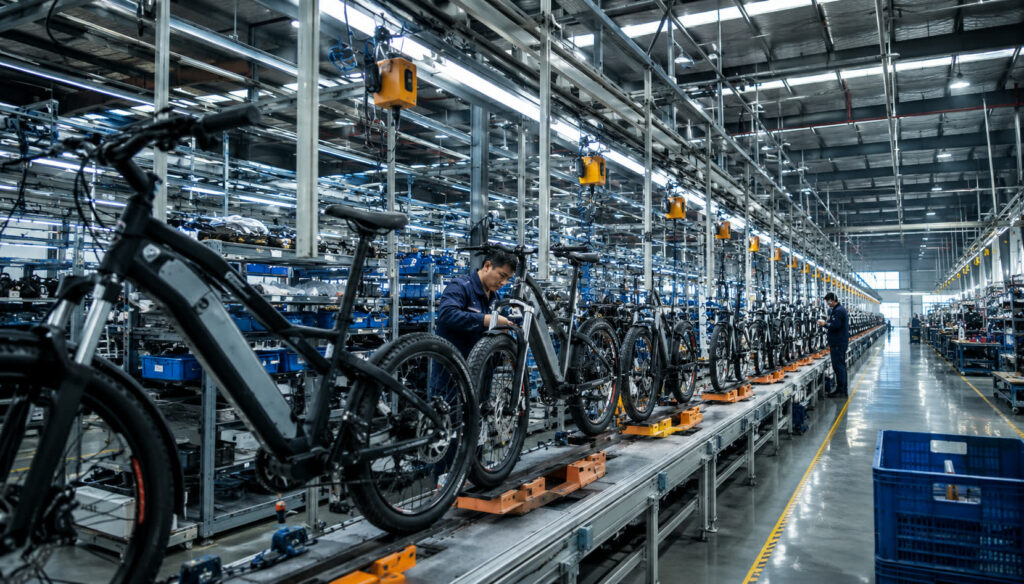
Cost reduction in bicycle sourcing is easy to do badly. A supplier can lower the quote by changing a rim, brake, cable, spoke, saddle, carton, paint process, or inspection plan. The buyer may not notice until samples feel inconsistent, the first container has damage, or customer reviews mention assembly and brake issues.
For DTC bicycle and e-bike brands, the goal is not to buy the cheapest bike. The goal is to reduce total cost while protecting the parts of the product that create safety, ride feel, durability, and customer trust.
This guide shows where to cut cost and where not to cut.
The Short Answer
You can reduce bicycle supply chain cost without weakening quality by auditing five areas:
- Frame and platform standardization
- Component BOM rationalization
- Supplier quote normalization
- Packaging and freight density
- Inspection gates tied to real safety and customer-risk points
Do not reduce cost by quietly downgrading brakes, reflectors, fasteners, weld quality, battery-related parts, control cables, or final inspection.
Start With The Regulatory Floor
For bicycles sold in the U.S., bicycle requirements are codified in 16 CFR Part 1512. These rules cover areas such as assembly, braking, protrusions, structural integrity, reflectors, instructions, and labeling. U.S. law also defines low-speed electric bicycles as bicycles with fully operable pedals and an electric motor below 750 watts, with motor-only speed below 20 mph under the defined test condition.
This matters for cost reduction because not every cost lever is acceptable. A factory can reduce cost by changing a reflector set, brake configuration, manual, label, or assembly state. But if that change creates compliance or safety exposure, the apparent savings are not real savings.
Before negotiating price, lock the mandatory baseline:
- Product category and target market
- Applicable bicycle or e-bike rules
- Brake system requirement
- Reflector and visibility requirement
- Permanent marking and traceability requirement
- Instruction manual and carton labeling requirement
- Third-party test needs for children-specific products, if applicable
Only then should you attack cost.
Cost Lever 1: Standardize The Platform
The largest savings usually come before the quote is sent. Bicycle cost increases when every model needs different molds, fixtures, tooling, paint masking, component lengths, carton sizes, and assembly instructions.
Platform standardization can reduce cost without touching quality.
Examples:
- Use the same frame platform across two colorways instead of two frame designs.
- Share fork, handlebar, stem, seatpost, and crank standards where possible.
- Keep cable lengths consistent across sizes when the fit range allows it.
- Limit custom color programs to proven SKUs.
- Use common carton architecture across a family of products.
The question is not, “How many models can we launch?” The question is, “How many models can we control?”
A leaner platform makes supplier production easier, improves replacement-part availability, lowers assembly variation, and reduces inventory fragmentation.
Cost Lever 2: Rationalize The BOM
The BOM is where small differences become major landed-cost differences. A bicycle is not a single product. It is a system of frame, fork, wheels, tires, drivetrain, brakes, cockpit, saddle, hardware, reflectors, manual, packaging, and sometimes electrical components.
When reducing cost, separate the BOM into three groups:
Protect
These items should not be downgraded casually:
- Frame and fork integrity
- Brakes and brake levers
- Wheels, spokes, and hubs
- Tires and tubes
- Fasteners and torque-critical hardware
- Reflectors and required labels
- Control cables
- E-bike battery, charger, controller, motor, wiring, and protection parts
Standardize
These items are often good targets for controlled cost reduction:
- Color options
- Accessory bundles
- Saddle style within the same comfort standard
- Grips
- Pedals
- Cosmetic hardware
- Carton insert layout
- Manual formats
Negotiate
These items need quote-level comparison:
- Component brand tier
- MOQ by part
- Shared purchase volume across models
- Supplier payment terms
- Warranty spare part allocation
- Inspection and testing fees
Use the BOM template to compare exact component changes, not just total bike price. A supplier who says the quote is $7 lower should show which lines changed.
Cost Lever 3: Normalize Factory Quotes
Two bicycle factories can quote the same model at different prices for legitimate reasons:
- Different Incoterms
- Different frame material or wall thickness
- Different wheel build quality
- Different paint process
- Different brake set
- Different carton strength
- Different included assembly level
- Different inspection scope
- Different warranty parts
Before choosing a supplier, normalize quotes into the same structure:
Factory price
+ tooling or mold cost
+ testing and certification cost
+ inspection cost
+ packaging cost
+ spare parts allowance
+ inland transport or FOB handling
+ payment term impact
+ estimated rework or defect allowance
If a quote does not list the exact component model or equivalent specification, treat it as incomplete.
Cost Lever 4: Improve Packaging And Freight Density
Bicycle packaging is a cost lever because carton size affects container loading, LCL cubic meter charges, parcel dimensional weight, warehouse storage, and damage claims.
Do not simply make cartons thinner. Instead, test packaging decisions against:
- Carton compression
- Drop and vibration risk
- Fork and derailleur protection
- Wheel and brake rotor protection
- Moisture exposure
- Label placement
- 3PL receiving rules
- Customer assembly experience
In many cases, a slightly better insert or carton design reduces total cost by lowering damage, replacement shipments, and support tickets.
The best packaging program is not the cheapest carton. It is the carton that survives the route, fits the logistics channel, and keeps customer assembly predictable.
Cost Lever 5: Use Inspection Gates, Not Random Inspection
Inspection should be designed around failure points.
For bicycles, useful inspection gates include:
- Incoming component check
- Frame and fork visual/weld check
- Paint and finish check
- Wheel trueness and spoke tension check
- Brake assembly and performance check
- Reflector and label check
- Torque-critical fastener check
- Final carton and accessory check
- AQL final inspection before release
For e-bikes, add electrical and battery-related checks handled by qualified parties and aligned with the target market requirements.
Cost reduction should never mean removing final inspection. A better approach is to reduce unnecessary rework by catching problems earlier in production.
Anonymous Case Fragment
A cycling accessory and bike brand was comparing two suppliers for a small production run. Supplier A was cheaper by unit price. Supplier B looked expensive.
After the BOM was normalized, Supplier A’s quote excluded the upgraded carton, had a lower brake-set tier, and did not include the requested spare-part allowance. The apparent savings dropped sharply after those lines were added back.
The brand did not choose the highest quote. It chose a third path: Supplier B’s production platform, but with a simplified color program, shared cockpit components, and a revised carton layout. The final cost dropped without weakening the safety-critical parts of the bike.
Practical Cost-Reduction Checklist
Use this before asking any bicycle factory to “sharpen the price”:
- Freeze the target market and required compliance baseline.
- Split the BOM into protect, standardize, and negotiate groups.
- Ask each factory to quote the exact same component list.
- Compare carton dimensions and loading plan, not just unit price.
- Keep inspection gates tied to safety, ride quality, and customer-visible defects.
- Ask every supplier to mark proposed substitutions clearly.
- Recalculate landed cost after packaging and freight changes.
The right supplier will be able to explain cost changes line by line. A vague discount is not a sourcing strategy.
FAQ
What is the safest way to reduce bicycle sourcing cost?
Start with platform standardization and BOM rationalization. These reduce complexity without immediately touching safety-critical parts.
Should I accept component substitutions from a bicycle factory?
Only after the substitute is documented, sampled, tested where needed, and approved against the same performance and compliance baseline. Undocumented substitutions are a major risk.
Can cheaper packaging reduce total cost?
Sometimes, but not always. Cheaper cartons can increase damage, returns, support tickets, and replacement shipments. Packaging should be tested against the actual logistics route.
What parts should not be downgraded casually?
Brakes, wheels, spokes, tires, frame/fork integrity, fasteners, reflectors, labels, control cables, and e-bike electrical or battery-related components should be protected.
What should I ask a factory before sampling?
Ask for a full BOM, component model list, carton dimensions, gross weight, inspection scope, compliance assumptions, spare-part plan, lead time, payment terms, and Incoterm.
Next Step
Send the current bike model, BOM, quote, or packaging issue on WhatsApp if you want the supplier review tightened before sampling, production, or shipment release.
Sources Checked
- eCFR: 16 CFR Part 1512 bicycle requirements –
https://www.ecfr.gov/current/title-16/chapter-II/subchapter-C/part-1512 - U.S. Code: 15 U.S.C. 2085 low-speed electric bicycles –
https://uscode.house.gov/view.xhtml?req=granuleid:USC-prelim-title15-section2085&num=0&edition=prelim - CPSC micromobility information center –
https://www.cpsc.gov/Safety-Education/Safety-Education-Centers/Micromobility-Information-Center