6 min read
Southeast Asia E-Bike Buyer Route For Distributor Programs And Spec Fit
Many distributor programs fail because the buyer asks for "an e-bike for Southeast Asia" as if that were one standard product.
It is not.
The right export specification changes by:
- road condition
- trip distance
- rider load
- charging environment
- climate
- service capability
- price band
- local selling channel
An e-bike that works for one city dealer or island distributor may be the wrong platform for another market only a few hours away.
That is why regional customization should start with a controlled specification checklist, not with a generic catalog request.
The Short Answer
Before quoting an e-bike distributor program for Southeast Asia, lock seven areas:
- target market and rider use case
- road condition, range, and carrying load
- battery, charging, and power-system assumptions
- frame platform, wheel size, and commuter equipment
- service parts, replacement flow, and maintenance reality
- carton, shipping, and landed-cost pressure
- low-MOQ changes versus true engineering changes
The supplier should not be asked only, "What is your e-bike price for Southeast Asia?"
The better question is, "Which export platform actually fits our market conditions without turning the first order into unstable custom development?"
Start With The Real Distribution Model
Before the technical discussion, define how the program will sell.
Ask:
- is this for retail stores
- local distributors
- fleet and rental
- commuter-focused dealers
- regional wholesale
- online resale with local assembly
This matters because the distribution model changes what the bike needs to do.
A retail dealer may need a cleaner visual package and easier showroom sell-through.
A regional wholesaler may care more about parts standardization and simple repeat ordering.
A fleet operator may prioritize robustness and service simplicity over feature density.
Without this commercial frame, the supplier can only guess what type of export platform to quote.
Range, Road Condition, And Rider Load
Southeast Asia programs should not be specified from brochure range only.
Check:
- average trip distance
- flat or mixed terrain
- rider weight expectation
- passenger or cargo use
- stop-start traffic pattern
- wet-season use
- heat exposure
- road surface quality
These factors change the real product requirement.
For example:
- poor roads may need stronger wheel and tire logic
- short city trips may not need oversized battery cost
- load carrying may require rack and frame decisions early
- hot climate and frequent charging behavior can influence battery positioning and service planning
The buyer who only asks for "long range" often ends up paying for the wrong problem.
Battery And Charging Reality
Battery selection for distributor programs should be commercial and operational, not only technical.
Check:
- battery capacity target
- removable or integrated battery
- charging environment
- plug and charger expectation
- charging frequency
- target replacement cycle
- battery documentation
- service stock requirement
For regional distributor programs, the battery question is also a parts and warranty question.
If replacement handling, charger consistency, and service support are vague, the first order may sell but the program can still become difficult to sustain.
This is especially important when the distributor network is still building and cannot absorb many battery-related aftersales surprises.
Frame Platform, Wheel Size, And Equipment
The right platform should be chosen from actual rider use, not only from appearance.
Check:
- step-through or diamond frame
- wheel size
- frame size suitability
- rack requirement
- fender requirement
- lighting package
- kickstand
- display location
- brake configuration
- tire width
In many Southeast Asia distributor programs, the winning configuration is not the most complex one.
It is the one that balances:
- stable supply
- easy service
- acceptable ride comfort
- price discipline
- local market familiarity
That is why an export-ready platform often outperforms a loosely defined "custom" model on the first order.
Service Parts And Maintenance Reality
This point is often underestimated.
Ask:
- what parts are likely to need replacement first
- what spare parts should ship with the first order
- whether key parts are standard across the program
- whether local technicians can service the configuration
- whether the display, controller, charger, and battery setup are repeatable
- what parts should be held as local safety stock
The best distributor program is not only the one that ships.
It is the one that can still be supported after 90 days in market.
If the first program uses too many uncommon combinations, the distributor may create avoidable service friction even if the launch order looked commercially attractive.
Shipping And Landed-Cost Pressure
Specification should also be tested against packing and landed cost.
Review:
- carton dimensions
- gross weight
- inner protection
- number of units per container plan
- rack or fender effect on carton size
- battery shipping assumptions
- local assembly requirement
Sometimes a distributor program looks correct at unit level but fails at landed-cost level because the chosen configuration adds:
- avoidable carton volume
- unnecessary accessory complexity
- more fragile packed geometry
- harder local assembly
An export platform should be quoteable all the way through to the shipment reality, not only through a model sheet.
Low-MOQ Changes Versus Real Engineering Changes
This is where many first programs lose control.
Ask the supplier to separate:
- cosmetic changes
- labeling changes
- carton mark changes
- simple equipment swaps
- market-fit accessory changes
from:
- frame geometry change
- battery architecture change
- wheel-size change
- motor-system redesign
- heavy rack or load-structure redesign
For first distributor orders, it is usually smarter to win with a stable export platform plus a few market-fit adjustments than to force deep engineering changes that the MOQ does not truly support.
Tianjin Platform Logic Matters
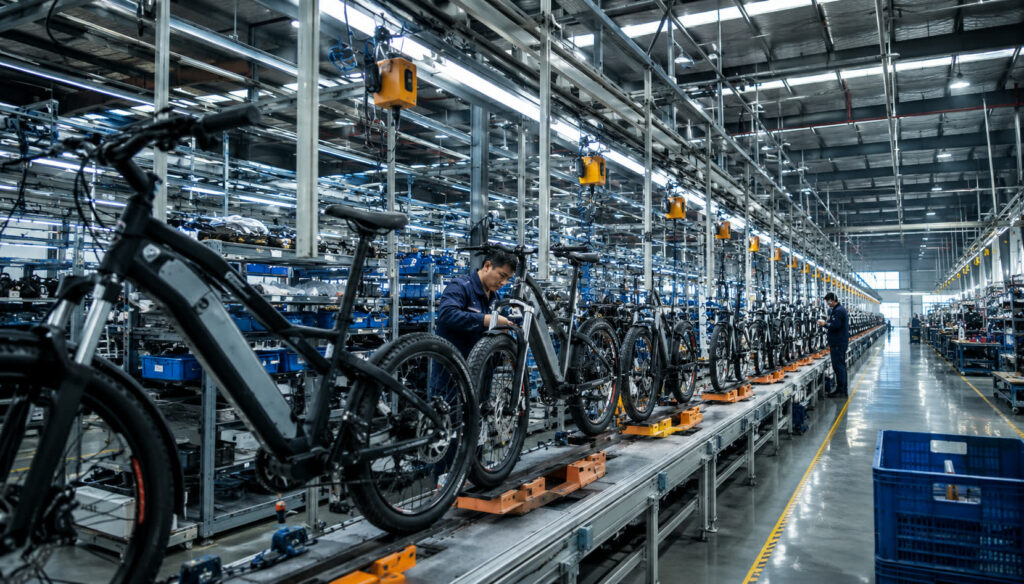
For buyers sourcing from Tianjin and the surrounding manufacturing base, the practical advantage is not "anything can be made."
The practical advantage is that a distributor can often choose from stable export platforms and then narrow:
- regional fit
- equipment level
- visual direction
- service-parts logic
- carton and shipment assumptions
That is much stronger than beginning with an undefined custom brief.
The supplier discussion becomes faster, the quote becomes cleaner, and the first container is less likely to carry hidden instability.
Anonymous Case Fragment
A distributor wanted one e-bike platform for a Southeast Asia program covering city use, local dealers, and moderate daily carrying needs.
The first request was broad:
- competitive price
- modern look
- decent range
- suitable for local roads
That inquiry produced mixed quotations because each supplier imagined a different product.
Once the buyer rebuilt the brief around actual market conditions, the options narrowed:
- realistic battery range instead of headline range
- rack and fender choices tied to use
- spare-parts list tied to service capability
- wheel and tire logic tied to local roads
- carton plan tied to the target landed cost
The project moved faster after the buyer stopped asking for a generic regional bike and started specifying a distributor program.
Southeast Asia E-Bike Spec Checklist
Before asking for samples or a first quotation:
- Define the target market, sales channel, and rider use case.
- Confirm road condition, trip distance, and carrying load.
- Lock battery, charging, and replacement assumptions.
- Choose frame platform, wheel size, and commuter equipment.
- Plan service parts and local maintenance reality.
- Review carton size and landed-cost pressure.
- Separate low-MOQ edits from true engineering changes.
The strongest regional program is the one that fits local riding and service reality before the first container moves.
FAQ
What should distributors define first for a Southeast Asia e-bike program?
They should first define the target market, rider use case, channel model, and local road and load conditions before asking suppliers for price.
Is a bigger battery always better for Southeast Asia distributor programs?
No. A larger battery can increase cost, weight, and service complexity without matching the real daily trip pattern of the market.
What is the biggest mistake in regional custom e-bike sourcing?
The biggest mistake is asking for a vague custom model without separating platform-safe changes from engineering changes that low first orders cannot support well.
Why do service parts matter so early?
Because distributor programs need repeatable support for chargers, displays, controllers, batteries, and wear parts after launch, not only an attractive first shipment.
How should a supplier present the right program?
The supplier should explain which export platform is stable, which features are already standard, what spares are recommended, and which requested changes affect cost, carton size, or engineering scope.
Send the market, target price band, rider use case, and preferred platform direction on WhatsApp if you want the first e-bike quote rebuilt into a cleaner distributor brief.
References
- U.S. Consumer Product Safety Commission bicycle requirements overview – https://www.cpsc.gov/Business–Manufacturing/Business-Education/Business-Guidance/Bicycle-Requirements-Business-Guidance
- U.S. Customs and Border Protection country of origin marking guidance – https://www.cbp.gov/trade/rulings/informed-compliance-publications/what-every-member-trade-community-should-know-about-marking